
San Francisco Bench Warrants
San Francisco bench warrants are issued by the San Francisco Superior Court when someone fails to appear for a scheduled court date or violates the conditions of their release. San Francisco is unique in California as both a city and a county, meaning the court system handles all local cases directly. The San Francisco Sheriff maintains warrant records and can arrest anyone with an active warrant. You can search for case information online through the court system. This page covers how to look up bench warrants in San Francisco, what happens if one is issued against you, and the options for clearing an outstanding warrant before it leads to arrest.
San Francisco Quick Facts
How to Search San Francisco Bench Warrants
The San Francisco Superior Court provides an online case information system. Visit webapps.sftc.org/ci/CaseInfo.dll to search for court records. Enter a name or case number to find case information. The system shows case status, charges, court dates, and other details. If a bench warrant was issued, it may appear in the case record.
San Francisco does not offer a free public warrant search database like some California counties. The case information system helps but is not a complete warrant list. For confirmed warrant status, contact the Sheriff or court directly. The Sheriff Warrants unit can be reached at (415) 553-9505. They maintain the official warrant database for San Francisco.
The San Francisco Police Department can check for warrants during in-person visits to stations. Bring valid photo ID. Officers run your name through city, county, and state databases. If a warrant exists, they will tell you what it is for and explain your options. You will not be arrested simply for asking about warrants at a station.
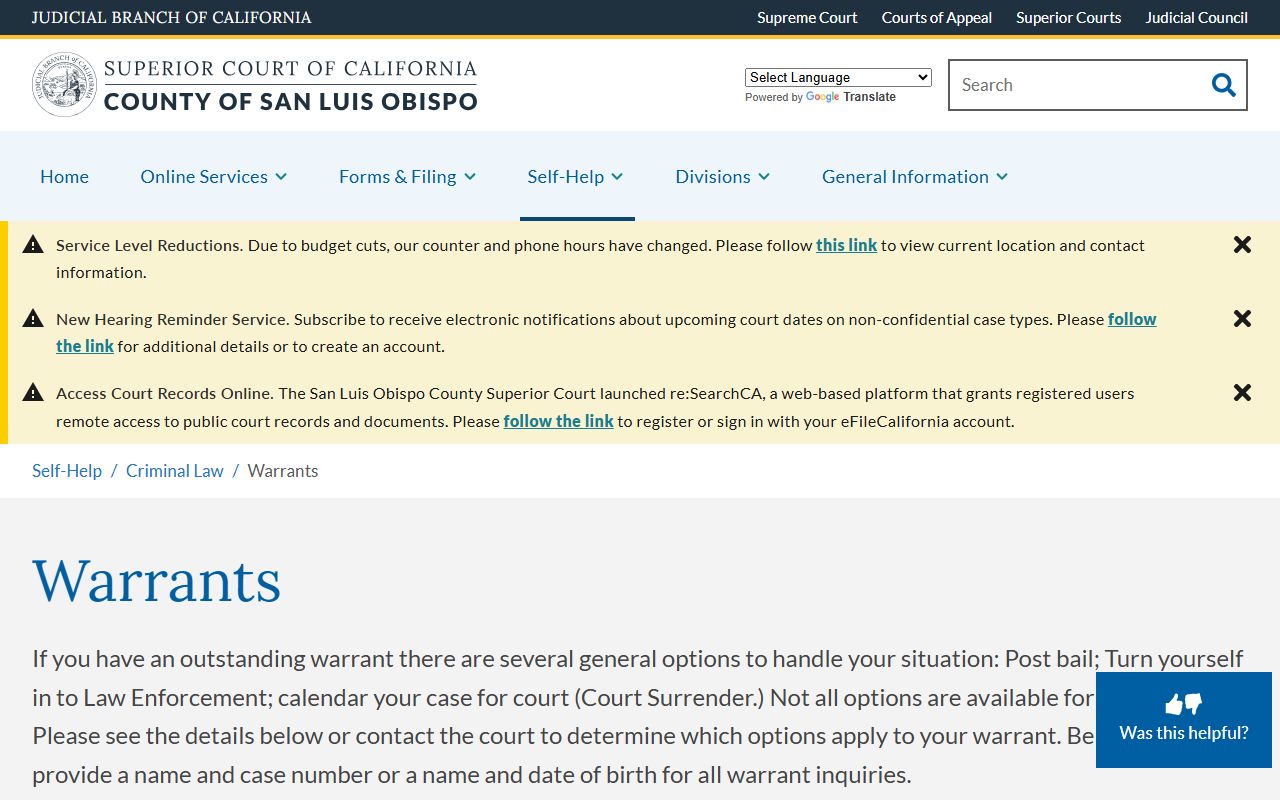
The court clerk's office at (415) 551-0651 can also help with case inquiries. They are located at 850 Bryant Street, Room 101. Staff can check if a warrant exists on your case and provide information about bail amounts and court dates. In-person visits give you the most complete information.
Note: San Francisco jail information is available at (415) 553-1430 if you need to check inmate status.
Clearing Bench Warrants in San Francisco
The main criminal courthouse in San Francisco is at 850 Bryant Street. This is where most bench warrants get resolved. The court handles criminal matters including warrant surrenders and recalls. Check in with the clerk's office in Room 101 to start the process.
For warrants with set bail amounts, you can post bail to clear the warrant and receive a new court date. Bail can be posted at the courthouse using cash, cashier's check, or money order. Credit cards may be accepted with additional fees. Once you post bail, the warrant is recalled and you get paperwork showing your new court date. Missing this date creates another warrant.
Felony bench warrants require appearing before a judge. You cannot simply post bail and leave on felony matters. Plan to spend the day at court. Arrive early. The judge will review your case, consider any explanation for missing court, and decide whether to release you or set new bail conditions. Having an attorney makes a difference in these hearings.
You can also turn yourself in at the San Francisco County Jail. The jail is located at 850 Bryant Street, the same address as the courthouse. When you surrender, staff book you and arrange for a court appearance. This might mean staying in custody until you see a judge. Some people prefer this approach because it lets them control when they deal with the warrant.
California law allows attorneys to appear for clients on some misdemeanor cases. Under Penal Code Section 977, your lawyer can ask the court to recall the warrant and set a new date. You stay out of custody while this happens. This works for many San Francisco misdemeanor cases but not all situations.
San Francisco Warrant Laws
Bench warrants in San Francisco follow California state law. Under Penal Code Section 978.5, judges can issue bench warrants when someone fails to appear in court as required. The warrant can be served anywhere in California. Police in any county can arrest you on a San Francisco warrant.
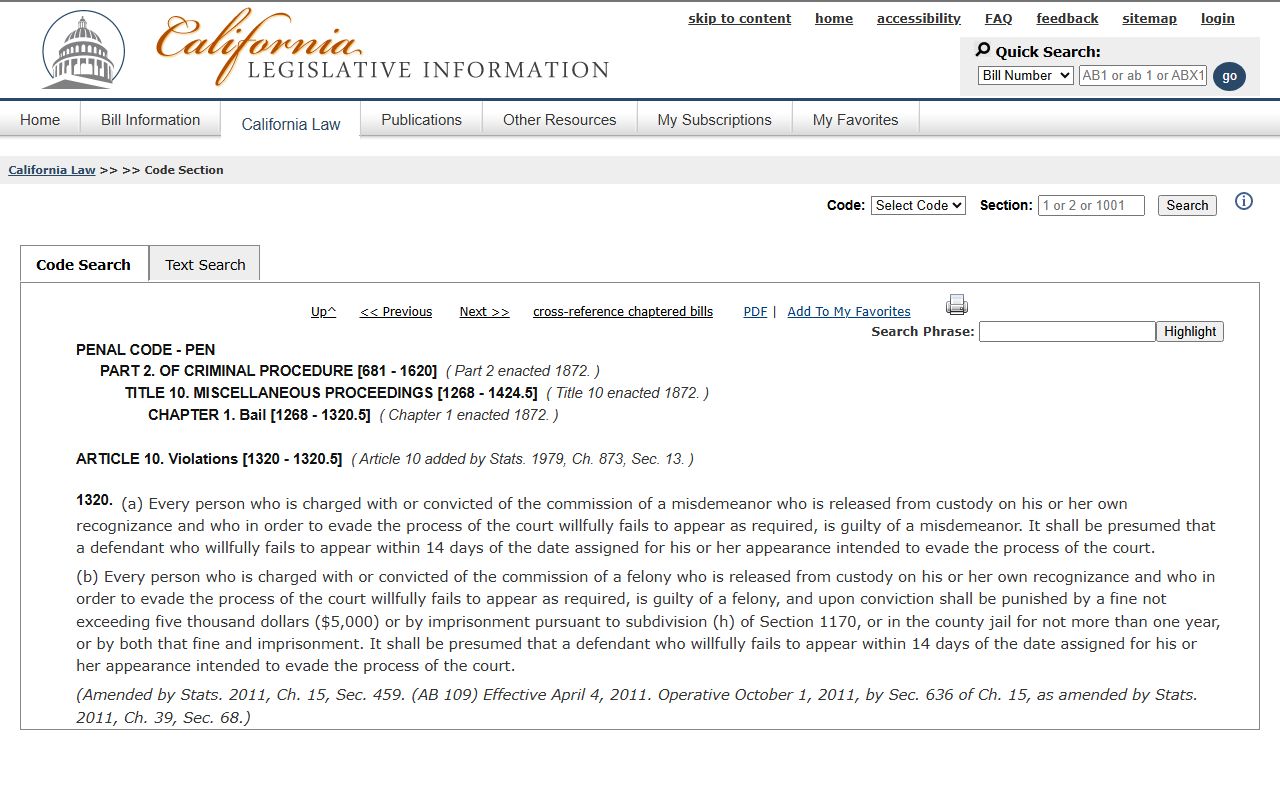
Missing court is a crime on its own. Penal Code Section 1320 makes it illegal to willfully fail to appear when released on your own recognizance. If you do not show up within 14 days, the law assumes you intended to skip court. This adds a new charge to your original case. Both charges get prosecuted.
For people released on bail for felony charges, the consequences are more severe. Penal Code Section 1320.5 makes felony failure to appear a separate felony. Fines can reach $10,000. You face prison time for this charge plus your original case.
Courts add financial penalties too. Under Penal Code Section 1214.1, a civil assessment up to $300 can be added when you fail to appear or pay fines. San Francisco traffic warrants often result in DMV holds. Your license renewal gets blocked until you clear the warrant and pay what is owed. These penalties add up quickly.
Living With a San Francisco Warrant
An active bench warrant in San Francisco creates daily problems. You can be arrested any time. This happens during traffic stops, at checkpoints, or when police respond to calls. SFPD and Sheriff deputies run names through databases during most contacts. A warrant hit means you go to jail.
Background checks often show active warrants. San Francisco employers check backgrounds before hiring. Landlords run them for apartment applications. In a competitive rental market, a warrant can cost you housing. Professional licenses may be affected. The warrant stays on your record until you resolve it through court.
Travel becomes risky with a warrant. TSA and border agents have access to warrant information. Domestic flights might still be possible, but there is always risk. International travel through SFO is more dangerous. Customs agents can detain you when you return. Some countries check US warrant databases before allowing entry.
California bench warrants do not expire. A San Francisco warrant from years ago is still active today. The court will not forget about it. Some people think enough time passing makes warrants disappear. This is false. The only way to clear a warrant is to deal with it through the court system. Until then, it follows you.
San Francisco Superior Court Information
The San Francisco Superior Court handles all criminal matters in the city and county. The main criminal courthouse is at 850 Bryant Street, San Francisco, CA 94103. This building houses the court, the clerk's office, and the county jail. Everything related to bench warrants happens at this location.
The clerk's office is in Room 101. Phone number is (415) 551-0651. Hours are limited so check the website or call before visiting. The clerk can provide case information, accept bail payments, and schedule court appearances.
Because San Francisco is both a city and a county, there is only one court system. You do not have to figure out which county handles your case. All San Francisco cases go through the same Superior Court. This simplifies things compared to areas where city boundaries cross county lines.
The California Judicial Council provides forms for warrant recall requests. Form CR-302 can be filed to ask the court to cancel a warrant. Your attorney can submit this form on your behalf. The judge reviews the request and decides whether to recall the warrant and set a new court date.
Nearby Bay Area Cities
These nearby cities have separate court systems. If you think your case might be from a different jurisdiction, check these areas as well.
San Francisco County Resources
For complete information about San Francisco County courts, Sheriff contacts, and warrant procedures, see our county page.