
California Bench Warrants
California bench warrants are court orders that allow law enforcement to arrest someone who failed to appear in court or violated the terms of their release. These warrants stay active until cleared and can be searched through county sheriff departments and superior courts across the state. You can look up California bench warrant records online in some counties, while others require in-person visits or phone calls to check warrant status. Each of the 58 counties in California maintains its own warrant database, so you need to search the specific county where the case was filed.
California Bench Warrant Quick Facts
What Are California Bench Warrants
A bench warrant is a court order. It comes from the judge's bench. When someone misses a court date or breaks the rules of their release, the judge issues this type of warrant. It tells police they can arrest that person and bring them to court. Bench warrants differ from arrest warrants because police do not have to go looking for the person. Instead, officers can make an arrest if they come into contact with the person during a traffic stop, at a checkpoint, or for any other reason.
California courts issue bench warrants for many reasons. The most common is failure to appear, which happens when someone does not show up for a scheduled court date. Courts also issue these warrants when a person violates probation terms or ignores a court order. Traffic tickets that go unpaid can lead to bench warrants too. A judge may also issue one if someone fails to pay fines or complete required programs. In civil cases, bench warrants can be issued when a witness refuses to testify or a party ignores a subpoena. The warrant stays active until the person deals with it or the court recalls it.
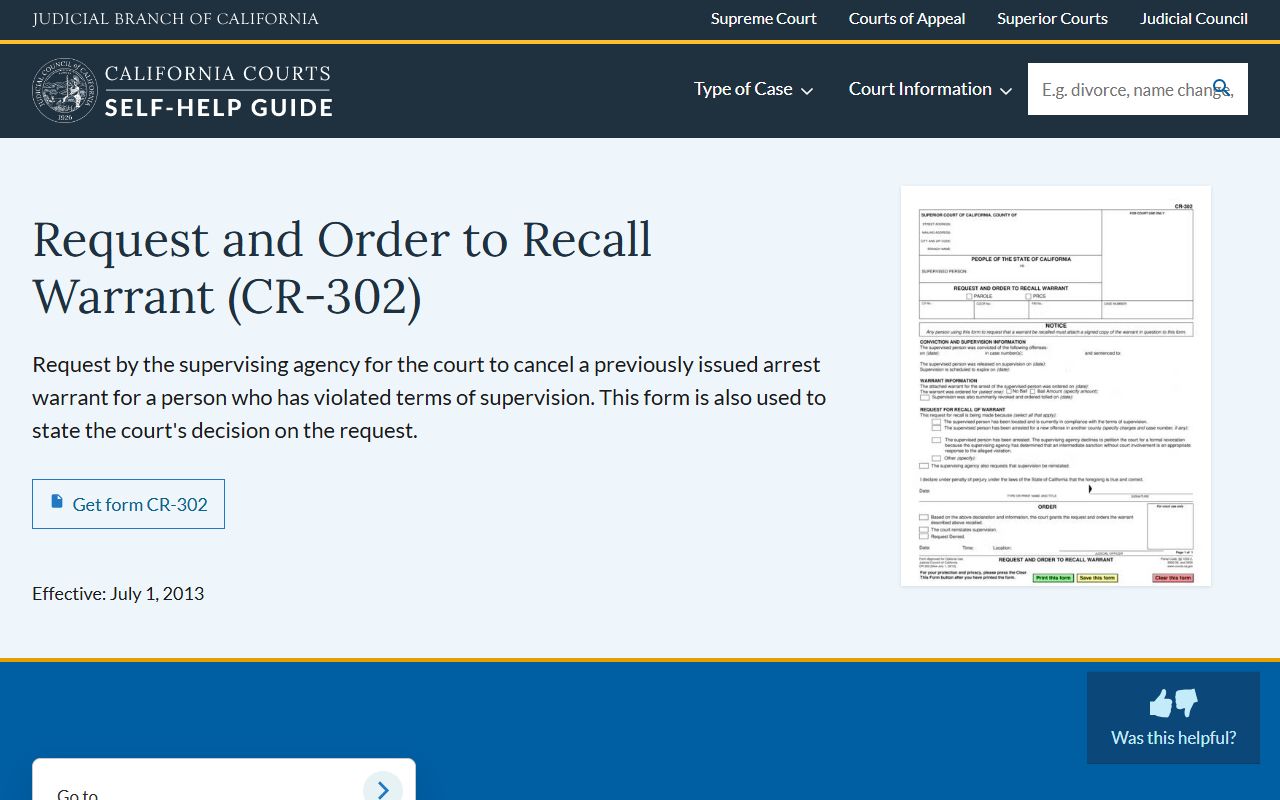
The California Judicial Council provides official forms for warrant requests and recalls. You can view these forms at the California Courts Self-Help Center which has Form CR-301 for warrant requests and Form CR-302 for recall requests.
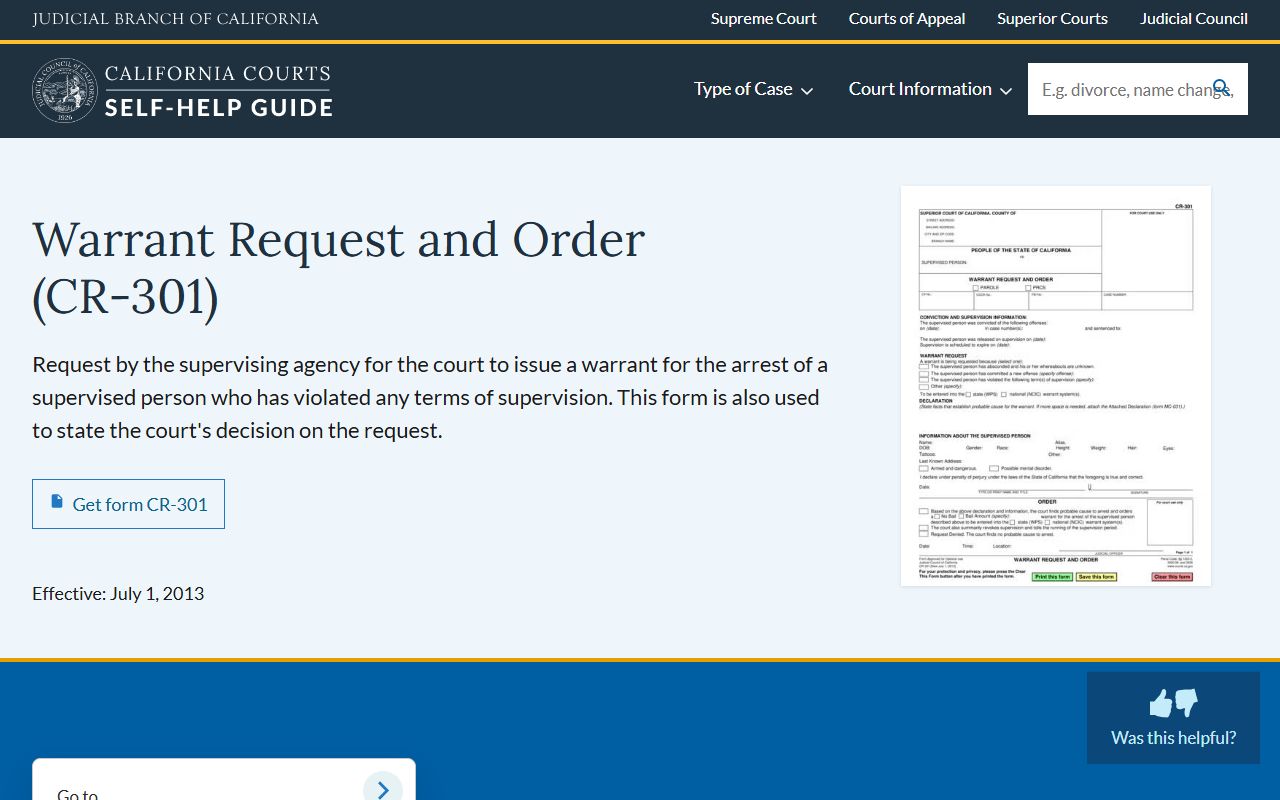
Note: Bench warrants in California do not expire and will remain active until resolved.
How to Search California Bench Warrants
There is no single statewide database for bench warrants in California. Each county keeps its own records. Some counties offer free online warrant searches. Others require you to call or visit in person. The best place to start is the county sheriff's office or the superior court in the county where the case was filed.
Eight California counties provide free online warrant search tools. These are Marin, Napa, Nevada, Orange, San Diego, Santa Cruz, Sonoma, and Humboldt counties. You can search by name to see if someone has an active warrant. The results show basic details like the person's name, date of birth, charge, and bail amount. Some databases update daily while others may be up to 24 hours old. Online searches are convenient but may not show all warrants, so calling the sheriff's office is a good backup step.
For counties without online search tools, you have other options to check for bench warrants. Call the sheriff's office and ask about warrant checks. Some will give information over the phone with proper identification. Others require you to come in with a photo ID. The superior court clerk's office can also help you look up case information. You can search by name or case number if you have it. Many courts now have public access portals where you can look up case status online, even if the warrant itself is not listed.
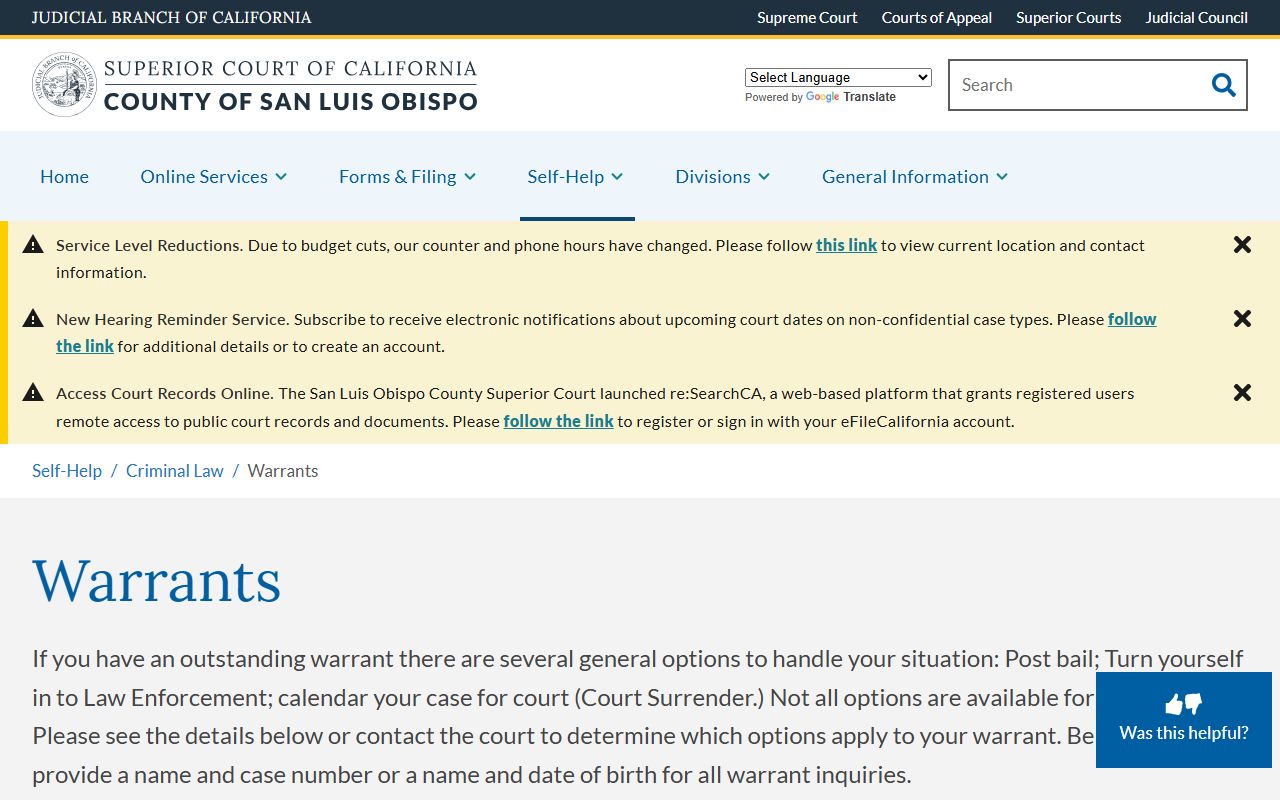
The San Luis Obispo Superior Court provides a helpful overview of warrant options at their self-help warrants page.
Counties With Free Online Warrant Search
Several California counties let you search for active warrants online at no cost. These tools are run by sheriff's departments or county agencies. They show warrant information for people who have failed to appear or have outstanding criminal charges. The data comes from official records but may not be complete. Always confirm with the issuing agency if you need verified information.
Marin County offers a warrant search at apps.marincounty.gov/warrantsearch where you can look up active warrants by name. Napa County has a similar tool at services.napacounty.gov/cjnetweb/warrantsearch that shows warrant details and bail amounts. Nevada County posts its active warrants list at the sheriff's warrant page. Orange County Sheriff runs a warrant search at ws.ocsheriff.gov/ArrestWarrants. San Diego County has a well-known warrant lookup at apps.sdsheriff.net/warrant/waar.aspx that covers adult criminal defendant warrants.
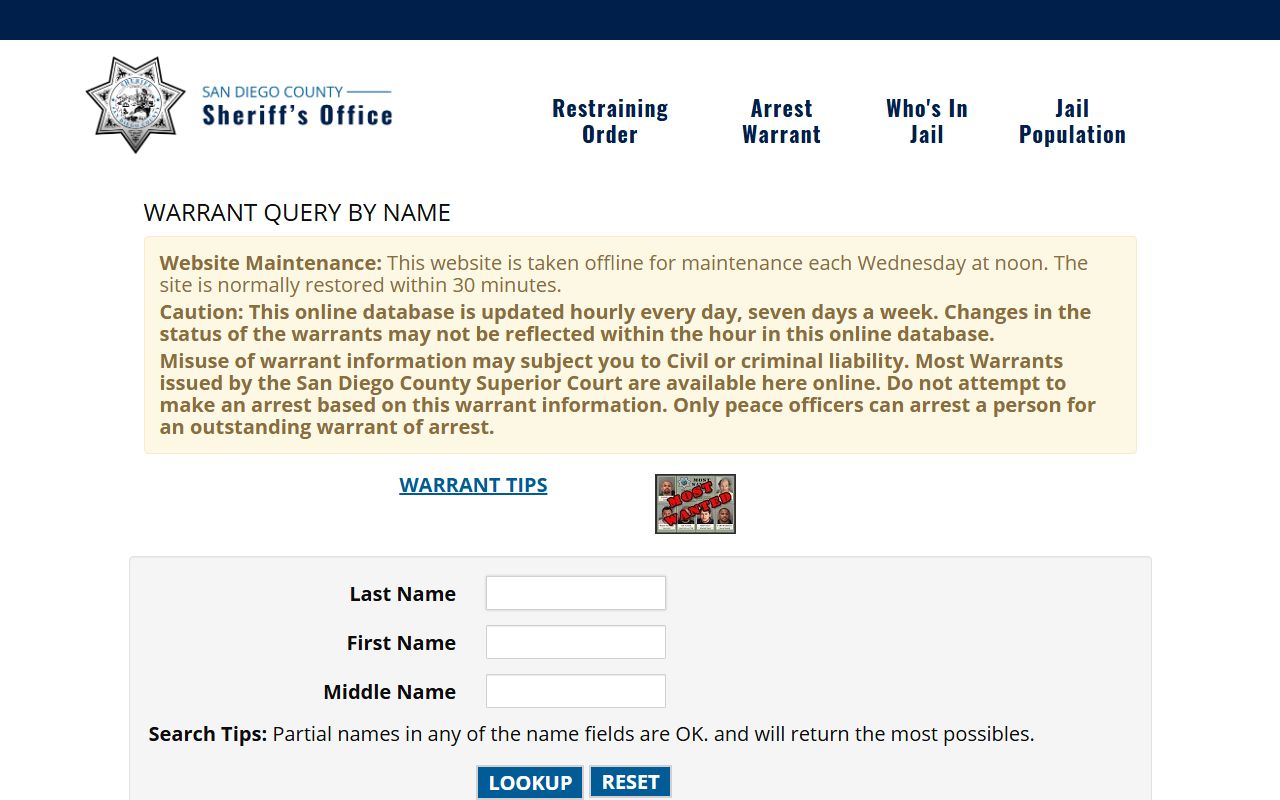
Santa Cruz County provides a search tool at santacruzcountyca.gov warrant search. Sonoma County Sheriff has warrant lookup at sonomasheriff.org/warrant-search. Humboldt County publishes a warrant list at humboldtgov.org/2215/Warrants. These free tools save time and let you check from home. But they only show warrants from that specific county, so you may need to search multiple counties if you are not sure where a case was filed.
Note: Online warrant databases may not include all warrant types or may have a delay in updates.
California Bench Warrant Laws
California law gives judges the power to issue bench warrants in specific situations. The main statute is Penal Code Section 978.5 which says a bench warrant may be issued when a defendant fails to appear in court as required by law. The warrant can be served anywhere in California, not just in the county where it was issued. This means if you have a warrant from Los Angeles and get stopped in San Francisco, police can arrest you on that warrant.
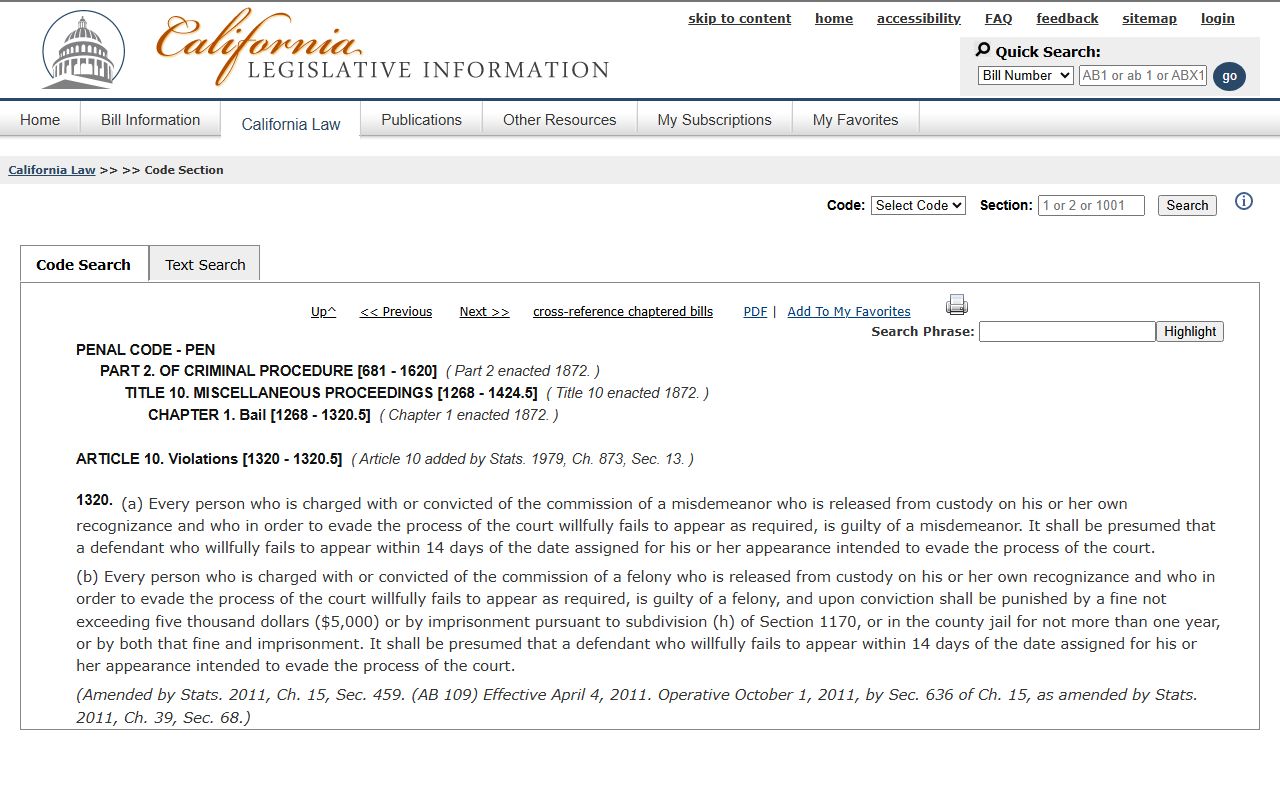
Failing to appear in court is a crime on its own. Penal Code Section 1320 makes it illegal to willfully fail to appear when you were released on your own recognizance. The law presumes you intended to avoid court if you do not show up within 14 days of your scheduled date. If you were released on bail and fail to appear for a felony charge, Penal Code Section 1320.5 applies. This is always charged as a felony with fines up to $10,000.
Traffic violations have their own rules. Penal Code Section 853.7 makes it a misdemeanor to violate a written promise to appear, except when the charge is just an infraction. Under Penal Code Section 853.8, courts must issue a warrant within 20 days when someone fails to appear on a citation. Recent changes through AB 1266 now stop courts from issuing bench warrants when the only charge is an infraction. This helps prevent people from going to jail over minor traffic tickets.
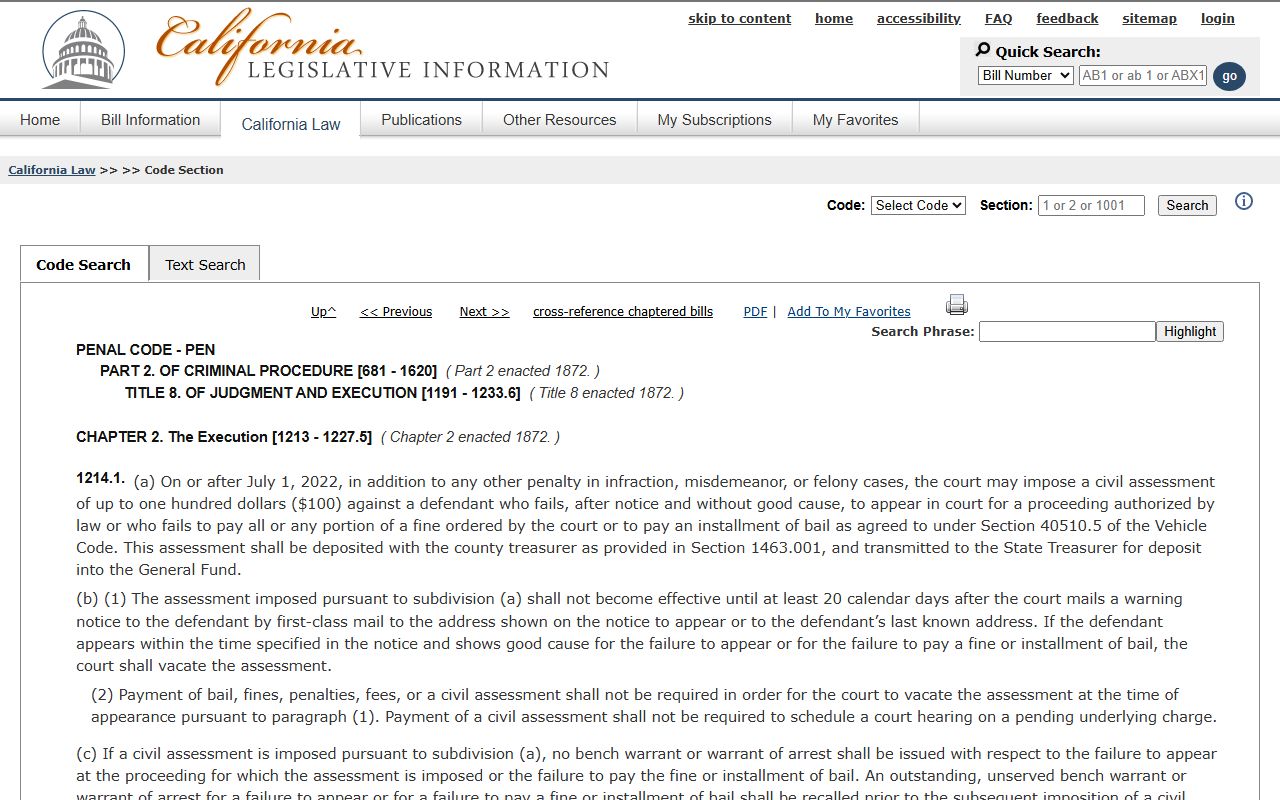
Courts can also hit you with extra fees. Penal Code Section 1214.1 lets courts add a civil assessment up to $300 when someone fails to appear or pay fines. This is on top of the original fines and any new charges. Civil bench warrants in non-criminal matters are covered by Code of Civil Procedure Section 536. These can be issued when someone ignores a court order in a civil case.
How to Clear a California Bench Warrant
If you have an active bench warrant, you have several options to resolve it. The right choice depends on the type of case, the bail amount, and your specific situation. Acting quickly is smart because warrants do not go away on their own. The longer you wait, the more problems you may face.
Posting bail is one way to clear a warrant. If your warrant has a set bail amount, you can pay that amount to get released and receive a new court date. You can post bail at the courthouse using cash, a cashier's check, a money order, or sometimes a credit card. Bail bondsmen can also help if you cannot pay the full amount. Some warrants say "no bail" which means you cannot use this option. You will need to appear before a judge instead.
Turning yourself in is another option. You can go to the county jail or any law enforcement agency in California and tell them you have an outstanding warrant. They will process you and either hold you until your court date or release you with a new appearance date. This option shows the court you are taking responsibility. Some people prefer this over being arrested at a random time. You can also surrender at the courthouse. Many courts have walk-in times for warrant surrenders where you can appear before a judge the same day.
California offers some alternatives to clear warrants without going to jail. Court surrender lets you schedule a date to appear before a judge voluntarily. The court sets you on the calendar and you show up at the assigned time. Your warrant stays active until you appear, so do not miss this date. Some courts allow "post and forfeit" on certain cases where you pay the bail amount and it closes the case without a court appearance. This works for some minor offenses but not all. Having a lawyer appear on your behalf is possible for misdemeanors under Penal Code Section 977. Your attorney can request the court recall the warrant and set a new date while you stay out of custody.
Note: Felony warrants typically require you to appear in person before a judge.
What Happens With an Active Bench Warrant
Living with an active bench warrant creates ongoing problems. You can be arrested at any time. This might happen during a traffic stop, at a routine checkpoint, or if police come to your home for any reason. Your name shows up in law enforcement databases that officers check regularly. The stress of knowing you could be arrested makes daily life harder.
California warrants affect more than just arrest risk. The DMV may place a hold on your driver's license if the warrant is related to a traffic case. You will not be able to renew your license until the hold is cleared. Background checks for jobs, housing, and loans may show the warrant. Some employers run regular checks and could fire you if a warrant appears. Travel becomes risky too. TSA and border agents have access to warrant databases and can detain you at airports or crossings.
The financial impact adds up over time. Courts add late fees and civil assessments when you miss appearances. Bail amounts may increase if you are seen as a flight risk. If you are arrested instead of surrendering voluntarily, you may sit in jail longer before seeing a judge. This could mean lost wages, lost jobs, and other costs. The original charge that led to the warrant is still there too. You will face those consequences plus any new charges from failing to appear.
California Department of Justice Records
The California Department of Justice does not maintain bench warrant records. Warrants are kept at the county level by sheriff's offices and superior courts. The DOJ handles criminal history records but not active warrants. If you need to check for a warrant, contact the county where your case was filed.
The DOJ does offer criminal history checks for individuals who want to see their own record. You can request your Record Review through the DOJ website. This costs $25 and requires submitting fingerprints. The record will show arrests and convictions but will not list active warrants. For warrant information, the DOJ website at oag.ca.gov/consumers/general/pra explains that you must contact the court with jurisdiction over your case.
CLETS, the California Law Enforcement Telecommunications System, does contain warrant information. But this system is only for authorized law enforcement. The public cannot access CLETS directly. Officers use it to check for warrants during stops and investigations. If you want to know your own warrant status, you need to go through county resources.
Browse California Bench Warrants by County
Each county in California has its own sheriff's office and superior court that handle bench warrants. Select a county below to find local warrant search options, contact information, and resources.
Bench Warrants in Major California Cities
City residents file cases at their county's superior court. Warrants are issued by the court and tracked by the county sheriff. Pick a city below to find local resources for checking warrant status.